
Garden design - part 7
Last month we explored the shift from summer into autumn, where colour softened and texture began to take centre stage. This time, we move fully into the transition from autumn into winter, where structure, contrast and subtle detail become the heart of the garden.
As autumn deepens, the garden begins to quieten, but it doesn't lose its appeal. Instead, it evolves. The stone wall on the east side continues to play a vital role, holding onto daytime warmth and helping protect more delicate plants as temperatures drop. Close to the house, planting still benefits from this gentle microclimate, allowing late performers to linger just that little bit longer.

The deciduous woodland beyond now becomes a striking feature. Its transformation from golds and russets into bare branches provides a dramatic, architectural backdrop. Rather than competing with this, the garden planting is designed to complement it focusing less on bold colour and more on form, silhouette, and texture.

As herbaceous planting fades, the underlying structure of the garden becomes more visible and more important. Seed heads from summer and autumn perennials are now a key feature. Left in place, they catch frost, hold dew, and create a sense of quiet beauty through the colder months. Ornamental grasses continue to sway in the winter light, their pale straw tones glowing against darker backgrounds.

Evergreen shrubs now come into their own. Photinia Red Robin provides consistent structure and subtle colour. Skimmia japonica offers compact form and winter interest with buds and berries. Bay laurel (Laurus nobilis) anchors the borders with its strong, evergreen presence. Meanwhile, dogwoods (Cornus spp.) step into the spotlight. With leaves now fallen, their brightly coloured stems reds, oranges and yellows bring vibrancy to the winter garden.

Ornamental grasses remain essential, even as growth slows. Varieties such as Miscanthus, Calamagrostis and Pennisetum continue to provide movement and structure. Their frosted plumes and upright forms add height and rhythm, especially when backlit by low winter sun. Perennials like sedum and echinacea, now dried, contribute sculptural elements. Rather than removing them, leaving these spent forms in place enhances the naturalistic feel and supports wildlife through the winter.

At ground level, interest continues in more subtle ways. Faded herbaceous growth gives way to evergreen groundcover such as low sedums, naturalised bulbs lying dormant, ready for spring and moss and leaf litter adding seasonal authenticity.
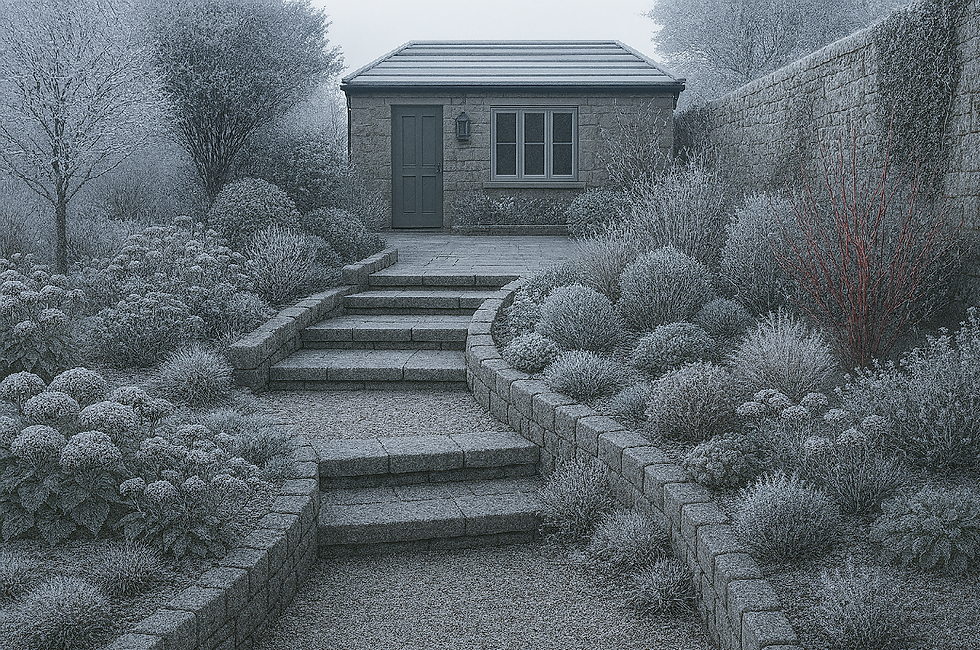
The rockery and path edges retain texture through low grasses and compact planting, ensuring there are no visually empty spaces even in the quietest months. The patio remains an important viewing area, particularly during shorter days when the garden is enjoyed from indoors.

Containers now shift fully into winter mode, combining Heuchera for foliage colour, Cyclamen for delicate winter flowers, evergreen herbs such as rosemary and sage and small ornamental grasses for movement. These combinations ensure that even in winter, the space feels considered and inviting rather than dormant.

By allowing the garden to transition gradually rather than abruptly, autumn flows naturally into winter. The emphasis shifts from colour to structure, from abundance to restraint. Frost, low sunlight, and bare branches are not seen as limitations but as features to be embraced. The bones of the garden - walls, shrubs, grasses and pathways, carry the design through the colder months, while subtle details reward closer observation. In this way, the garden remains engaging all year round, quietly preparing for the renewal that spring will bring.

As we’ve now taken this part of the garden through a full cycle, next month we will focus on a different part of the garden – the wildlife area.


Comments